 Custom AI Works
Cut Bottlenecks and Keep Your Tacoma Operation Moving
Tacoma runs on freight, healthcare, and skilled trades — and every one of them drowns in documents: bills of lading, customs forms, submittals, intake packets. We automate the extraction, routing, and follow-up so your operation keeps moving and your people keep judgment.
Port of Tacoma & Tideflats · MultiCare & VMFH · South Sound trades
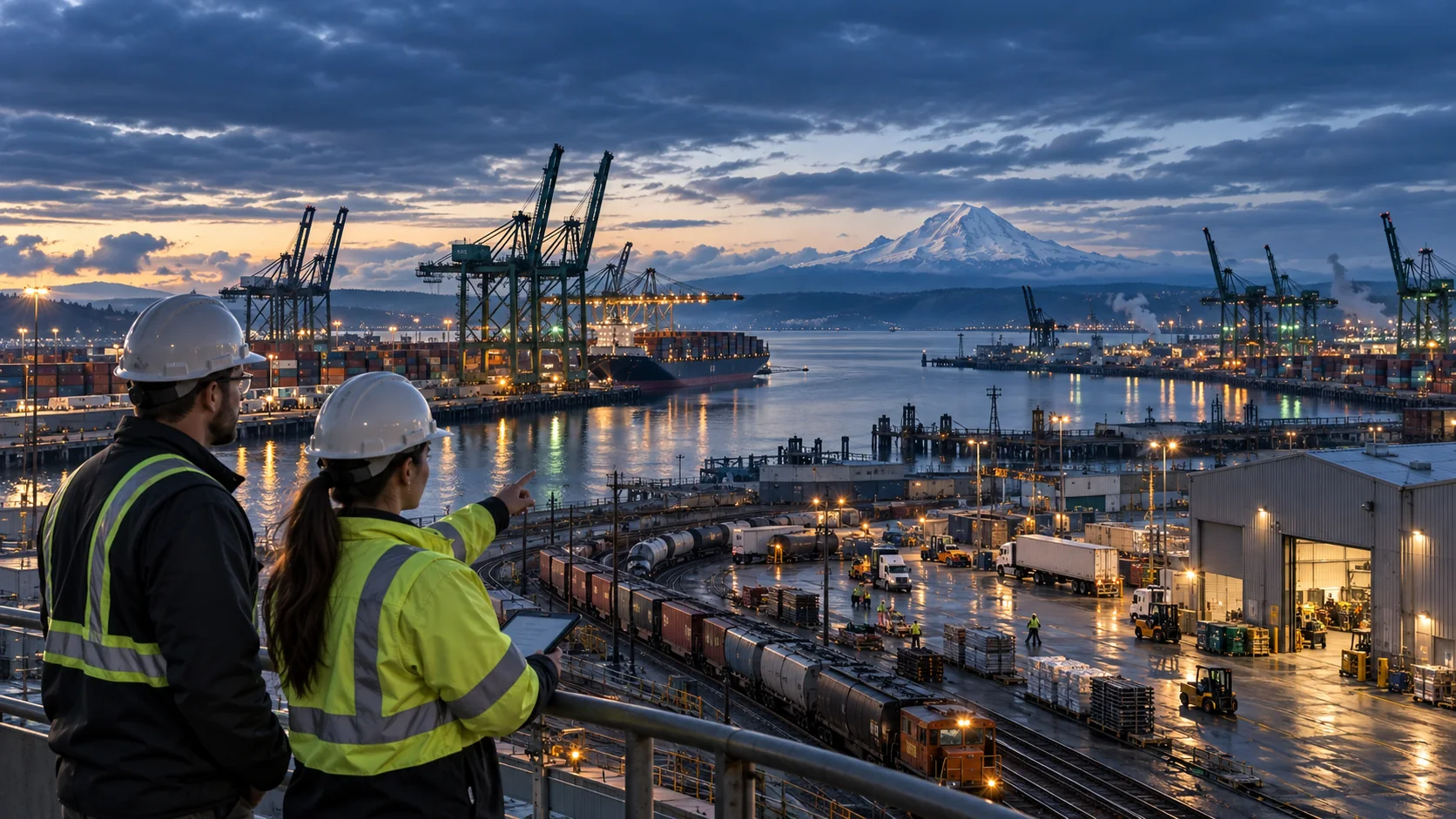
Tacoma's economy is physical — so is its paperwork
Port & Logistics
BOL and customs extraction on the Tideflats, dispatch and status automation, and document queues that keep freight moving instead of waiting on re-keyed fields.
Healthcare
Practice scheduling near the hospital systems: intake, reminders, and referral paperwork around MultiCare and Virginia Mason Franciscan — staff approve, AI never decides care.
Trades & Manufacturing
Construction bid and submittal paperwork, AI phones for South Sound trades, and back-office document automation for shops that run on paper travelers.
Downtown Small Business
Grant and program reporting, lead follow-up, and the everyday copying between systems that eats a small team's week.
How Tacoma does business
Tacoma's economy is physical. The Port of Tacoma — half of the Northwest Seaport Alliance, one of the largest container gateways in the country — anchors a logistics and warehousing corridor that runs from the Tideflats to Fife and Sumner. Around it: manufacturing, construction trades, and the military economy of nearby Joint Base Lewis-McChord.
Tacoma is also a healthcare hub — MultiCare and Virginia Mason Franciscan are both headquartered here — and downtown's revival around UW Tacoma has filled in professional services, creative firms, and hospitality. These industries share one automation profile: document-heavy operations, high call volume, and margins that punish administrative overhead.
That's the work we automate: freight paperwork that processes itself, phones answered around the clock, patient and client intake that doesn't require retyping, and dashboards that tell an owner what actually happened this week.
Tacoma, district by district
Tacoma's economy is physical. The Port of Tacoma — half of the Northwest Seaport Alliance, one of the largest container gateways in the country — anchors a logistics and warehousing corridor that runs from the Tideflats to Fife and Sumner. Around it: manufacturing, construction trades, and the military economy of nearby Joint Base Lewis-McChord.
Tacoma is also a healthcare hub — MultiCare and Virginia Mason Franciscan are both headquartered here — and downtown's revival around UW Tacoma has filled in professional services, creative firms, and hospitality. These industries share one automation profile: document-heavy operations, high call volume, and margins that punish administrative overhead.
| Local friction | First automation | Outcome to measure |
|---|---|---|
| Bills of lading and rate confirmations move through email | Validated document capture into dispatch and customer-status workflows | Fewer re-keying errors and more dispatcher attention on exceptions |
| Bid packages, submittals, and RFIs live in separate trackers | A controlled construction-document pipeline with reminders | Less office time chasing versions and overdue responses |
| Clinics lose appointment capacity to phone tag and no-shows | Intake, reminder, recall, and escalation automation | A steadier schedule without removing clinical review or judgment |
Tacoma AI automation questions
Do you actually serve Tacoma, or just Seattle?
Tacoma is a first-class market for us, not an afterthought. We take on-site meetings across Pierce County — Tacoma, Fife, Puyallup, Lakewood, University Place — and price for South Sound businesses, not Seattle tech budgets.
What can AI actually do for a logistics or freight business?
The paperwork is the goldmine: bills of lading, customs documents, rate confirmations, and status updates that currently require humans retyping between systems. Automating those flows typically saves hours per dispatcher per day and cuts costly data-entry errors.
We're a small Tacoma shop, not a tech company. Is this overkill?
A focused first build can stay simple: handle routine and after-hours call intake, request appointments, and follow up on open quotes. We compare the cost with your current missed-call and follow-up baseline before you decide whether to expand.
What does it cost and how fast is it live?
Cost and timing depend on the workflow, integrations, access, exceptions, and testing. We define a fixed first scope, owner responsibilities, third-party costs, and acceptance checks before paid work begins.
Do you work with contractors and construction companies?
Extensively — bid assembly, submittal and RFI tracking, job-site photo documentation, and field paperwork that files itself. Pierce County's construction boom runs on exactly the document flows we automate.
Our dispatchers live in email and spreadsheets. Where do you even start?
With a half-day shadow of your dispatch desk. The first build is usually the single worst re-keying loop — rate confirmations or status updates — automated end to end while everything else stays untouched. Prove it works, then expand.
Request a Tacoma review
Tell us what is getting in the way in Tacoma. We'll reply with the most useful next step and a fixed scope.