Custom AI Strategies That Deliver Results
A professional guide to choosing the right custom AI use case, implementation path, controls, team, and measurement plan.
Quick answer: A professional guide to choosing the right custom AI use case, implementation path, controls, team, and measurement plan.
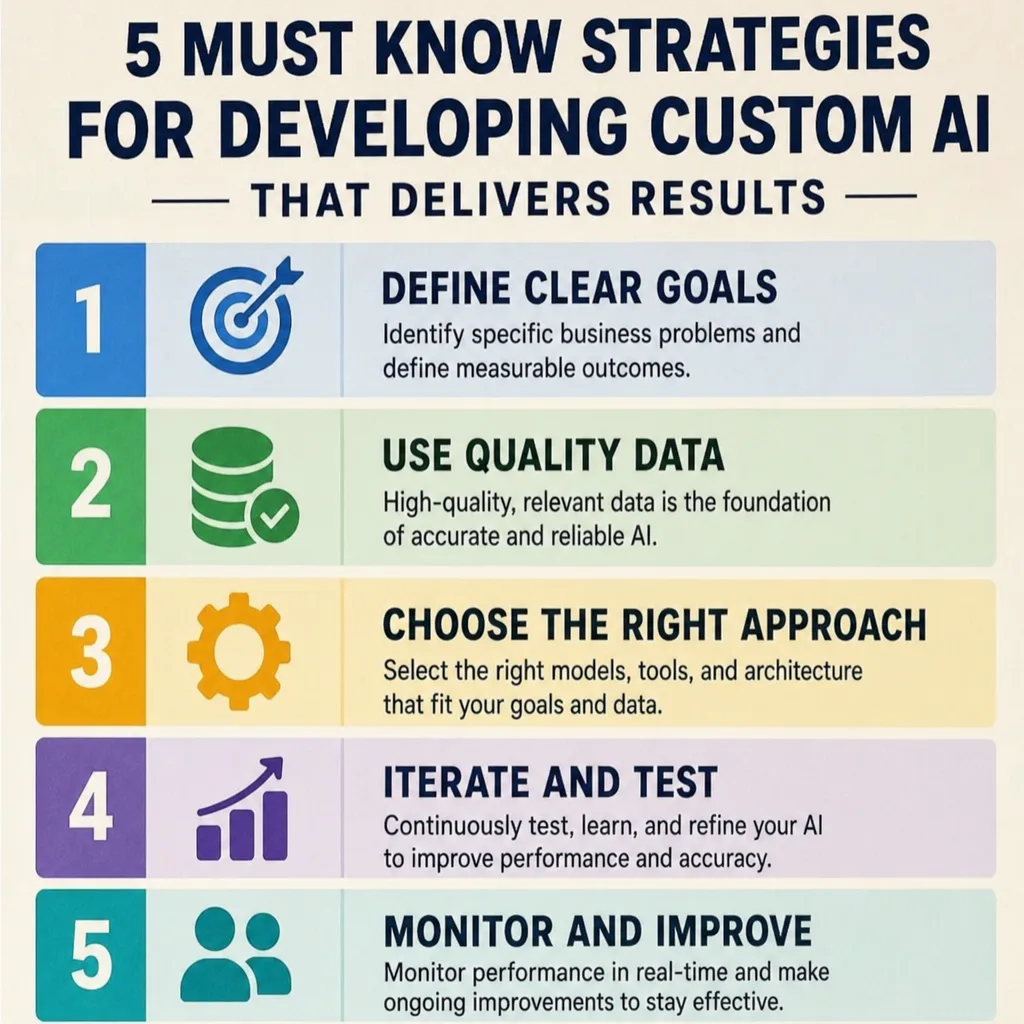
Custom AI is changing how companies work. It gives teams tools that fit clear business needs. In customer service, AI can handle repeat work and let human agents focus on harder cases. That can raise speed, cut errors, and improve satisfaction. Brands like Home Depot show how AI in customer service can work at scale. To build strong custom AI, teams need a clear ideal customer profile, good data, and regular training. They also need steady updates so the system stays useful.
Introduction to Custom AI
Custom AI is built for one business, not for every business. Unlike off-the-shelf tools, it fits unique goals, workflows, and customer needs.
The key strength of custom AI is its flexibility. Businesses can use it to solve exact problems and get better results. It can also support a better customer experience by matching how people really work.
To build useful custom AI, teams must know their audience well. They need to understand what customers want and how they behave.
Key benefits of custom AI include:
- Streamlining work
- Better customer engagement
- Lower running costs
Custom AI still needs investment. Teams must plan for data, tools, and skilled people.
Regular checks and updates are also important. They help the system stay effective as business needs change.
Definition and Importance
Custom AI is a special system that solves a business's own problems. It is built for clear goals, not generic use.
Its value comes from better fit. Custom AI can boost efficiency, support faster work, and improve results. It also helps teams give more useful service.
Key benefits include:
- Tailored solutions
- Higher efficiency
- Better customer service
When businesses focus on real needs, custom AI can drive strong results.
Trends in AI Development
AI is moving fast. New tools and methods keep appearing, so businesses must stay current.
Machine learning and natural language processing are still core parts of custom AI. They help systems understand users and respond in better ways.
Current trends include:
- AI ethics and transparency
- Better data privacy rules
- Stronger automation
Businesses that follow these trends can improve their AI plans and stay competitive.
Understanding Your Ideal Customer Profile
To get the best value from custom AI, businesses must know their ideal customer profile. This profile can include demographic, behavior, and interest data. It helps define what a valuable customer looks like.
These details guide AI toward better personal service. They also help teams predict needs and improve loyalty.
Key elements to track include:
- Buying behavior
- Customer pain points
- Preferences and expectations
Businesses should keep updating their customer profiles. Needs change, so the AI should change too. Regular updates help the system stay relevant.
Role of Ascend Sales Advisors
Ascend Sales Advisors use AI to sharpen customer profiles and engage buyers. They study large data sets to spot patterns and needs.
Their focus areas include:
- Data-driven insights
- Predictive analytics
- Customer segmentation
This approach shows how ideal customer profile AI can guide better decisions. It helps AI offer more relevant support and better engagement.
Key Attributes to Identify
Finding the right customer traits is key to custom AI. These traits guide how the system decides and responds.
Important traits include:
- Demographic details
- Behavior patterns
- Purchase motivation
When AI understands these traits, it can personalize service in a better way. That can raise satisfaction and make the system more useful.
Strategies for Effective AI Engagement
Strong AI engagement starts with clear goals. Custom AI should match customer needs and business goals.
To do that, teams should focus on:
- Personalization: Match replies to customer data.
- Consistency: Keep the same service quality across channels.
- Timeliness: Reply quickly to requests.
By focusing on these points, AI can offer a smooth customer experience. Another key step is linking AI with current customer service systems. That helps AI support human agents with routine tasks and route hard issues to the right person.
Businesses can also use AI for customer service to handle common questions faster. This keeps support teams free for more complex work.
Teams should check and refine AI often. Customer needs change, and the system should keep up.
Training staff matters too. When people know how to work with AI, service quality improves. Data privacy and security should stay high on the list as well.
Utilizing AI to Enhance Customer Support
AI can lift customer support in many ways. It handles repeat tasks and gives human agents more time for complex problems.
AI customer support gives teams a faster way to answer common requests.
Key benefits of AI in customer support include:
- 24/7 availability: Help is always on.
- Quick response times: Customers wait less.
- Personalized service: Replies fit customer data.
AI for customer service can make support faster and more personal. It can also reduce pressure on support teams and help them solve harder issues.
Case Study: Home Depot's AI Customer Service Model
Home Depot has used AI in customer service with good results. Its model shows how AI can improve retail support and give better recommendations. The Home Depot AI customer service model is a clear sign that careful use can pay off.
Highlights include:
- Efficient problem-solving: AI handles common questions fast.
- Personalized recommendations: AI studies customer behavior and suggests products.
This use of customer service AI has improved the shopping experience. It has also helped the company make service faster and more consistent.
Building AI for Customer Interaction
Building AI for customer interaction takes a full plan. The system must meet company goals and customer needs at the same time.
Core skills should include:
- Natural Language Processing (NLP): Understand and reply to human language.
- Machine Learning: Improve from data over time.
- Predictive Analytics: Expect customer needs and behavior.
These skills help AI respond in a natural and useful way. Customers get a smoother service journey and better support.
The system should also fit into current service tools. Good integration helps AI support human agents instead of getting in their way.
Training and updates are also needed. As customer behavior changes, the AI must change too. That keeps the system useful and aligned with service goals.
Strong AI can raise efficiency, cut running costs, and improve satisfaction. Businesses should keep improving the system over time.
AI in Customer Service: Benefits and Challenges
AI changes customer service by delivering steady results. It brings real benefits, but it also brings some hard problems.
Benefits:
- Efficiency: AI speeds up work and replies.
- Scale: AI handles high volumes easily.
- Availability: Customers get help all day and night.
There are still challenges to solve. AI can struggle with subtle human language. The setup and training can also cost a lot. Data privacy and security stay important. To deal with these issues, teams need smart planning and regular tuning.
Integrating AI into Customer Service Frameworks
Integrating AI into customer service systems can raise efficiency without hurting quality. The process works best with careful planning.
Important points include:
- Seamless CRM Integration: Data should move cleanly between AI and agents.
- Cross-Channel Consistency: Service quality should stay the same on every platform.
Good integration helps AI support human work. It lets agents focus on hard issues while AI handles routine tasks. That keeps service strong and workload lower.
Measuring Success of Custom AI Implementations
Success starts with clear goals. Teams need to know what the AI should do and how to judge results.
A strong plan uses key performance data. These numbers show how well the system works and how it affects satisfaction.
Teams should review results often. That makes it easier to spot weak points and improve fast.
Feedback loops help too. Customer input and internal review give a fuller view of performance.
Key Performance Indicators (KPIs)
KPIs help teams measure custom AI performance. They show how well the system supports business and customer needs.
Common KPIs include:
- Response Time: How fast AI replies.
- Resolution Rate: How often issues get solved.
- Customer Satisfaction: How users rate the help they get.
Tracking these numbers helps teams see what is working and what needs change.
Tools for Tracking Performance
The right tools make review easier. They show data, trends, and gaps in clear ways.
Useful tools include:
- Analytics Platforms: Study interaction data.
- Feedback Systems: Collect customer input.
- Reporting Tools: Build performance reports.
These tools support better decisions and better tuning over time.
Future Trends in Custom AI Development
Custom AI will keep changing as tech improves. Companies should expect more features and better fit over time.
Expect AI to become more intuitive and context-aware. Better machine learning will help it understand and predict complex human behavior. That will make customer interactions smoother and more personal.
As new tools grow, businesses can use them to stay ahead.
Key trends to watch include:
- Enhanced Personalization: More tailored interactions.
- Improved Scalability: Systems that grow with the business.
- Augmented Reality Integration: Better digital and physical experiences.
Innovations on the Horizon
The AI field is moving toward new ideas and new tools. Businesses that stay alert can keep their edge.
Expected innovations include:
- AI and IoT Fusion: Smarter spaces and devices.
- Advanced NLP: More natural chat with AI.
- Adaptive Learning Systems: AI that grows with user behavior.
These advances promise major impacts on business processes.
Preparing for Ongoing Changes in Customer Needs
Flexibility is key when customer needs shift. Businesses should stay ready to adjust fast.
Preparation includes:
- Continuous Market Research: Track customer trends.
- Flexible System Design: Keep AI easy to update.
- Customer Feedback Loop: Use regular input to guide changes.
Staying responsive helps companies keep success and customer satisfaction high.
Publication references and safeguards
These primary references give readers a direct path to verify the risk, governance, and example context used around implementation decisions.
Sources and methodology
External claims in this guide are linked to the original or authoritative source available at publication time. Sources are provided for context, not as a promise that another business will achieve the same result.
Frequently asked questions
Why is understanding the ideal customer profile so important before building custom AI?
It helps teams design AI around real customer needs, behavior, and pain points. That leads to better service, more personal replies, and stronger business results.
What makes custom AI different from an off-the-shelf AI solution?
Custom AI is built for one company's goals, workflows, and customers. Off-the-shelf tools are more general, so they may fit less well.
How can businesses measure whether their custom AI is successful?
They can set clear goals and track KPIs like response time, resolution rate, and customer satisfaction. Analytics, feedback, and reports help guide fixes and updates.
What are the main challenges of implementing AI in customer service?
The main issues are cost, data systems, and staff training. AI can also struggle with subtle language, so privacy and security must stay strong.
How should companies prepare their custom AI systems for future customer needs?
They should keep the system flexible, update customer profiles, collect feedback, and watch market trends. Ongoing training and new tech help AI stay useful.
Turn one high-value use case into a buildable plan
Show us the decision, workflow, or knowledge problem you want to improve. We’ll help separate what needs custom AI from what should stay deterministic or human-led.
Find Your Best First Automation →